Chapter IX · Death & grief
How do we live with death?
On mortality, ritual, and why grief is not something we should have to carry alone.
Every life ends, but death is never only an ending. A loss changes the room around it: the words people can find, the gestures they repeat, the silence they share. Grief is intimate, but it is never entirely private. The question is not only how we face death, but how we remain beside one another when it arrives.
In Western Attitudes toward Death, Philippe Ariès traced how death in the industrialised West became increasingly hidden and difficult to name. We often meet it in hospitals, notifications and private rooms, then return quickly to ordinary life. Byung-Chul Han’s The Palliative Society describes a related algophobia: the wish to treat every pain as a malfunction and life as survival to be prolonged at any cost.
Avoidable suffering should be prevented, treated and relieved. Pain does not automatically make anyone wiser or better. But grief is not a defect in an otherwise healthy life. It hurts because someone mattered. If every sign of that hurt becomes embarrassing, private or inefficient, we may leave each person alone with an experience that is also profoundly social.
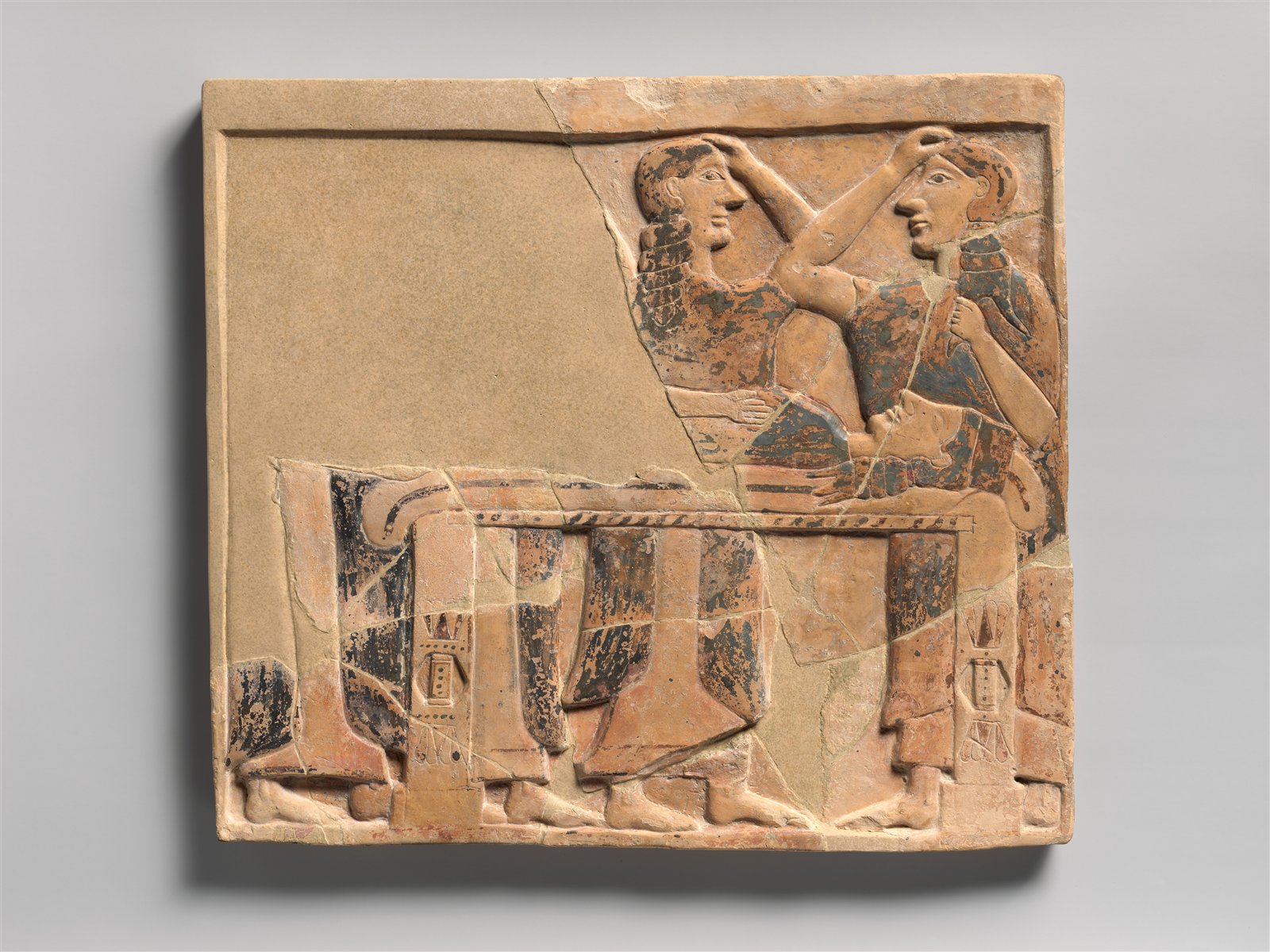
Older mourning practices in southern Italy make that social dimension visible. Women who performed ritual laments were often called chiangimorti, literally “those who weep for the dead”, as well as prefiche or rèpute. Some laments belonged to relatives; some were entrusted to experienced women called in for the funeral and paid for their work. Ritual and sincerity were not necessarily opposites. An inherited form could carry a feeling too large to express alone.
Anthropologist Ernesto de Martino understood lament as a cultural response to a “crisis of mourning”. Death can interrupt not only a relationship but a person’s ability to remain present in the world. Rhythm, words, gestures and witnesses did not undo the loss. They gave grief a form through which the living could pass together.
Cecilia Mangini’s short documentary Stendalì (Still They Toll), filmed in Martano in 1960, preserves one of the last Salentine funeral laments. The ceremony was re-enacted for the camera by women who still held the tradition, so it is not a transparent record of an untouched past. It still lets us see grief becoming sound, movement and collective presence.
We do not need to recreate that institution or idealise the poor and unequal world in which it survived. What matters to me is its refusal to make mourning a private failure. The chiangimorti did not remove another person’s pain. They stood inside it, made it audible, and allowed a community to answer. No one should have to prove strength by grieving quietly.
Mortality also gives our choices a shape, although finitude alone cannot tell us what deserves our time. Endless life would not simply be the same life with more room, but it would be cruel to call every death a gift when it can take away a future that was still wanted. An ending can matter without every ending becoming timely or good.
Nietzsche’s eternal recurrence asks us to imagine this life returning in every detail. I read it less as a promise of an afterlife than as a test: can I stop treating the present as a waiting room for a better life? Affirmation cannot mean approving injustice or leaving preventable suffering untouched. It means refusing to value existence only on the condition that nothing in it ever hurts.
In Bergman’s The Seventh Seal, Antonius Block cannot defeat Death at chess or force the universe to answer him. He can gain a little time, help a family escape, and share a finite afternoon of milk, wild strawberries and conversation. Accepting death does not require wanting it or explaining it away. It can mean allowing its certainty to return our attention to the life and people still here.
The chiangimorti offer no victory over death. They offer something more ordinary: when one life is broken open by loss, others draw closer. We cannot make grief painless, but we can keep it from becoming wordless and solitary.