Chapter V · Others
Can we make room for others?
On meeting another person without reducing them to a reflection of ourselves.
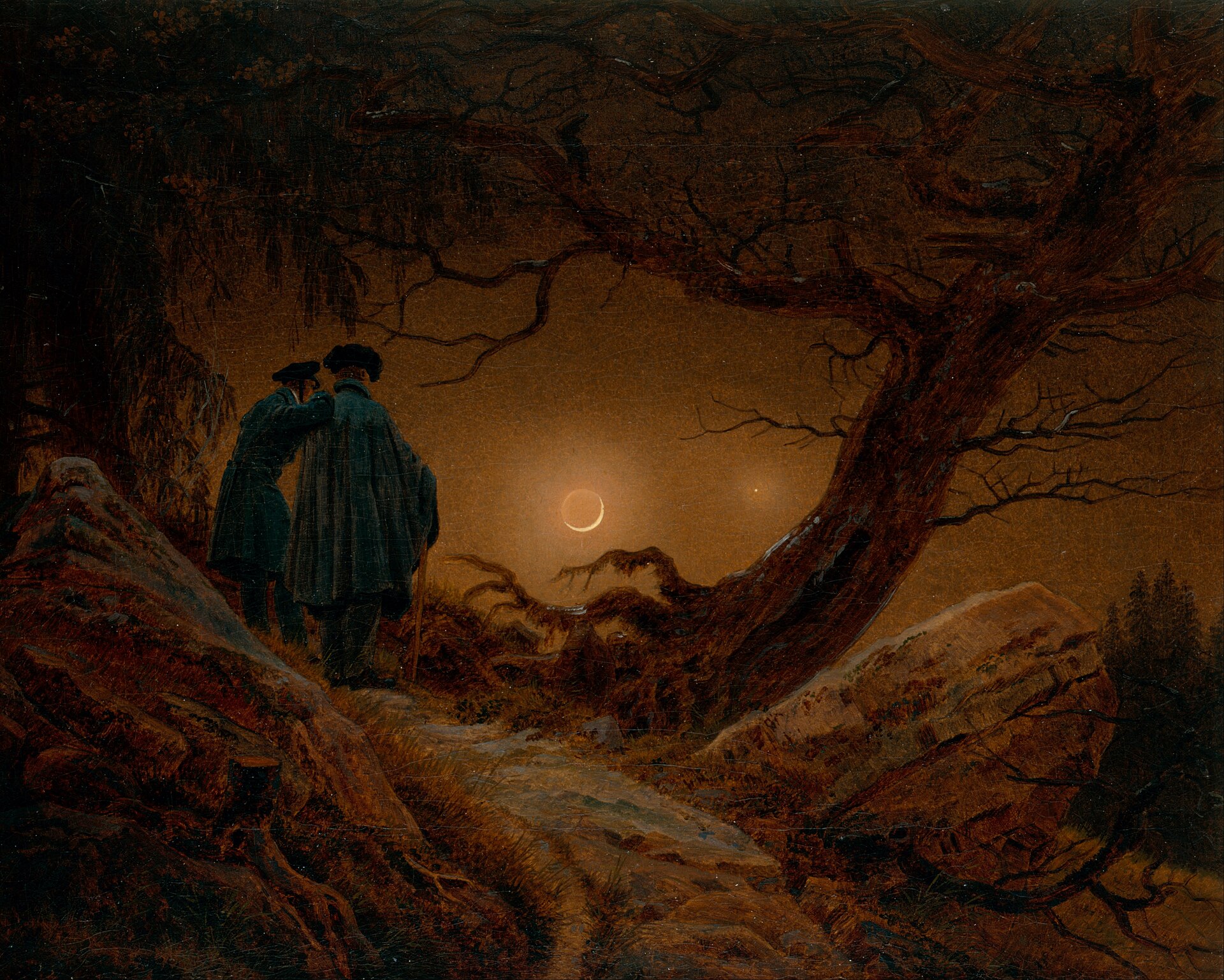
Han’s The Expulsion of the Other makes me think about what happens when everyone I encounter becomes a reflection of myself: the same opinions, the same expectations, the same familiar world.
An encounter begins when someone exceeds the picture I had of them. They may disagree with me, unsettle me, or show me something I could not have found alone.
That tension also appears in Dostoevsky’s The Brothers Karamazov. Zosima recalls a doctor who dreams of serving humanity but can barely bear sharing a room with another person:
“The more I love humanity in general, the less I love man in particular.”
Translated by Constance Garnett.
An idea cannot interrupt us, disagree with us, or ask us to change our plans. A person can. I want to practise the active love Zosima speaks of: caring for the person who is actually here, through those ordinary difficulties.
Listening means leaving enough room for someone else to change the conversation.